
How to Use TrackiPro
Get your TrackiPro activated, position it securely, and start monitoring your vehicle or asset.
Activate
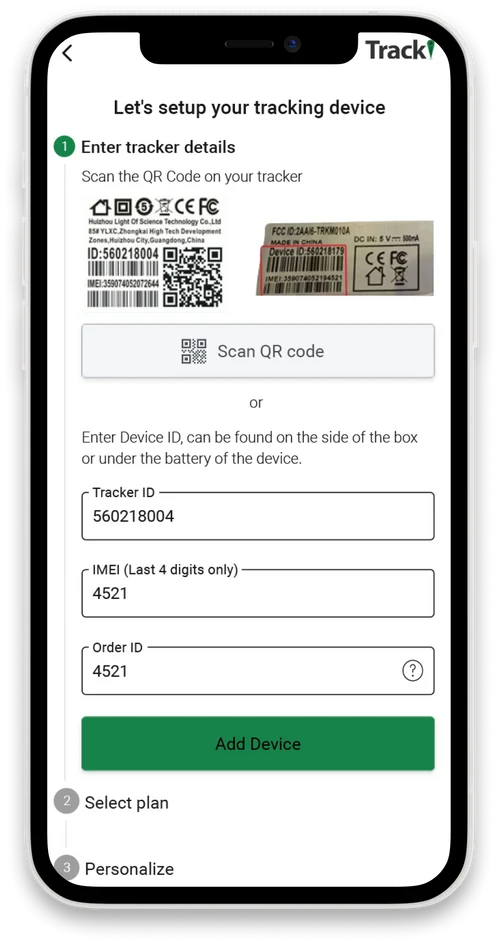
Add your TrackiPro to your Trackimo account and complete the activation process. Enter the requested device information and select the service plan that best suits your tracking requirements.
Place Your Device
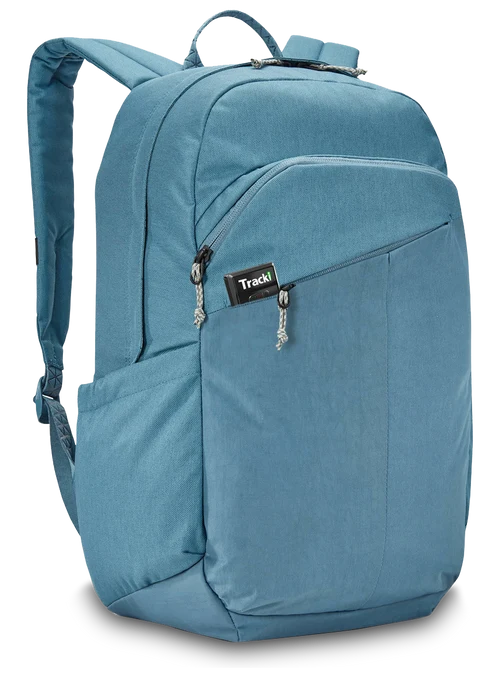
Secure TrackiPro to the vehicle, equipment or other asset you want to monitor. Choose a protected mounting location while allowing the tracker to maintain good GPS and cellular reception.
Start Tracking
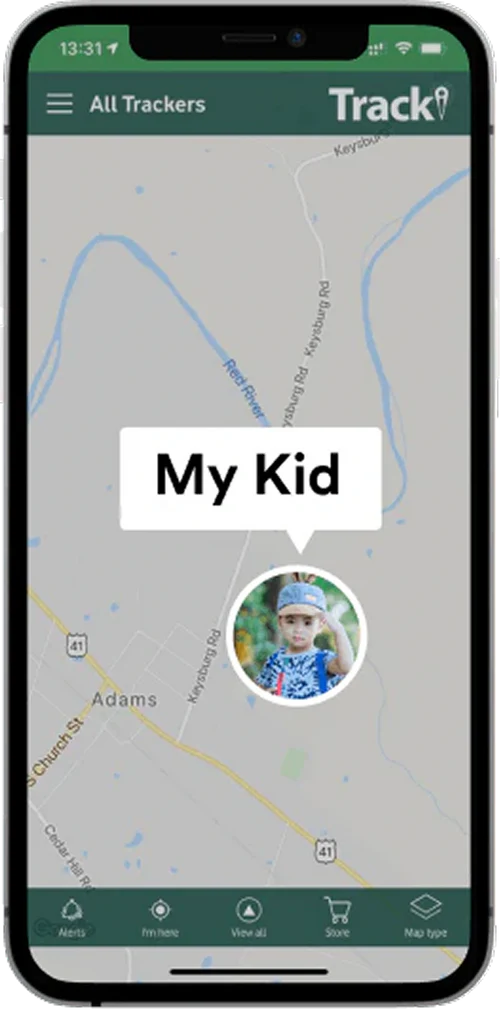
Sign in to your Trackimo account to view the latest reported location of your TrackiPro. Depending on your configuration, you can also review location history and receive supported tracking alerts.
How the App Works
Set up your Trackimo account, connect your TrackiPro, and manage tracking from your compatible device.
Create an Account
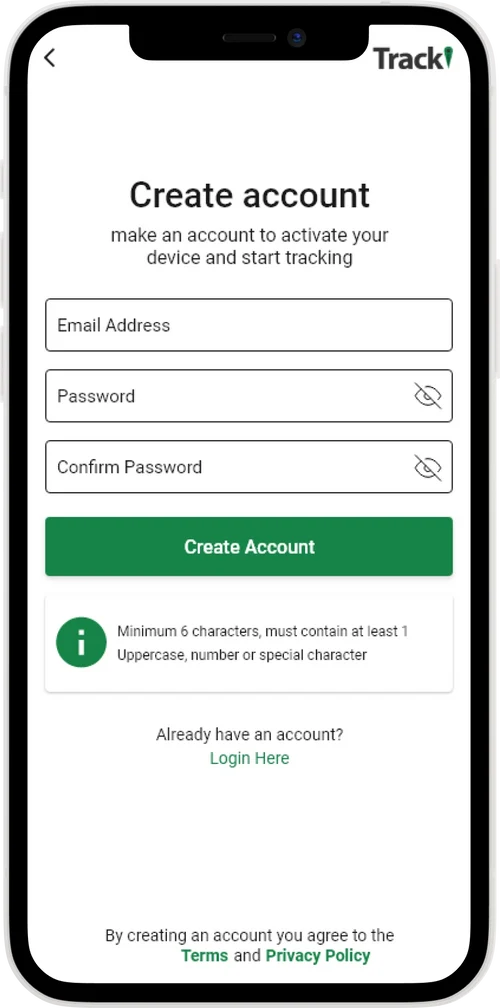
Create your Trackimo account using your email address and secure password. If you already have an account, simply sign in to continue.
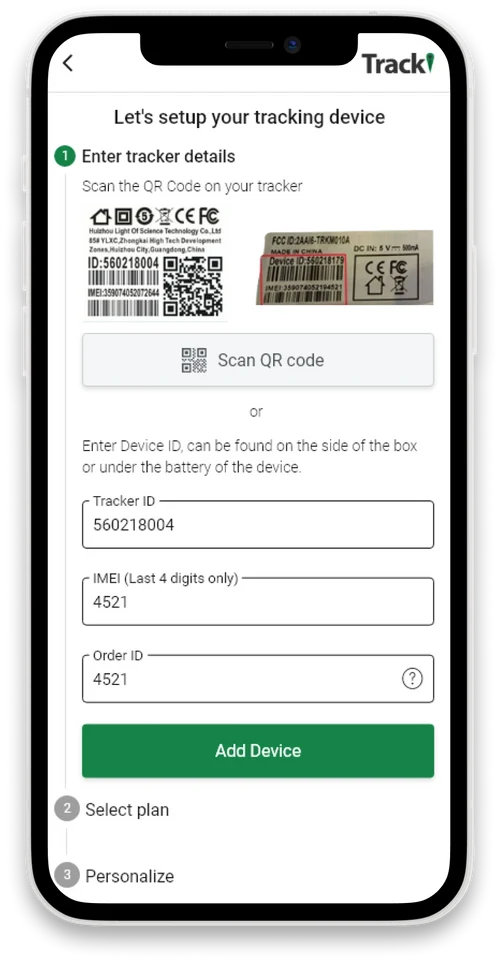
Activate Your Device
Add TrackiPro to your account using the information supplied with your tracker. Complete the activation prompts and choose the appropriate connectivity plan.
Start Tracking
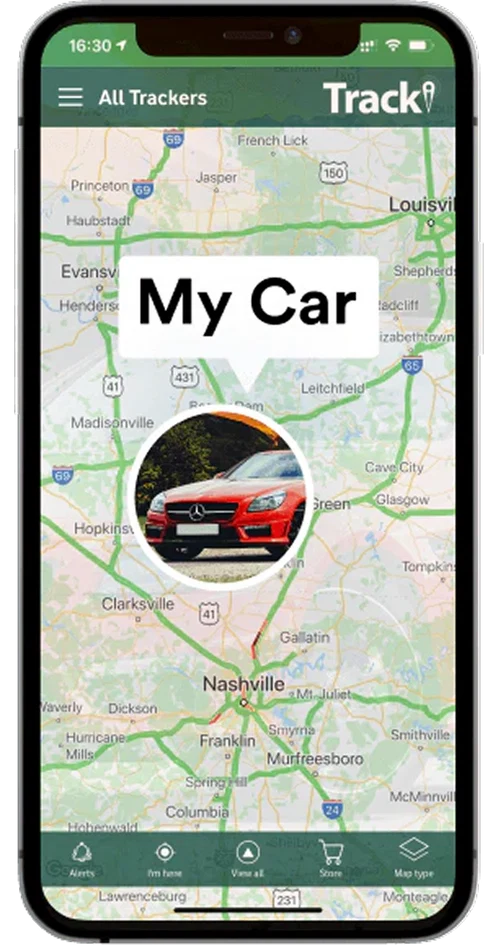
Once TrackiPro has been activated and installed, select it from your account to see its reported position and begin monitoring the vehicle or asset.
A Guide to How GPS Trackers Work
GPS tracking technology makes it possible to monitor the location and movement of vehicles, equipment and other important assets. Here's an overview of how the technology works and where it can be useful.
Understanding How GPS Trackers Work
A GPS tracker determines its position by receiving signals from navigation satellites orbiting the Earth. By comparing signals from multiple satellites, the tracker can calculate its approximate latitude and longitude.
That location can then be transmitted to a tracking platform, allowing you to view the position of the tracker from a phone, tablet or computer.
How GPS Trackers Determine Location
Global Navigation Satellite Systems use groups of satellites that continuously broadcast positioning and timing information. A compatible tracker receives several of these signals and uses them to calculate where it is located.
The strongest GPS performance is generally achieved outdoors with a relatively clear view of the sky. Buildings, underground locations and surrounding metal can reduce satellite reception.
Connectivity and Communication
Finding the tracker's location is only one part of the process. The tracker must also communicate that information to the tracking platform.
- Cellular connectivity: allows location information to be transmitted over compatible mobile networks.
- Wi-Fi positioning: nearby Wi-Fi networks can help support location estimation in suitable environments.
- GPS: satellite signals provide outdoor positioning information.
Remember: GPS reception and cellular communication are separate. A tracker may be able to calculate its location even when it cannot immediately transmit that location.
Using GPS Trackers for Different Applications
GPS trackers can be used in many different situations. The ideal installation and tracking settings will depend on what you need to monitor.
Cars and Motorcycles
Vehicle GPS tracking can help owners and businesses monitor vehicle location, review trips, manage mobile assets and respond more quickly when a vehicle is moved unexpectedly.
Family and Personal Safety
With the knowledge and consent of the person being monitored, location technology can provide useful information for appropriate family and personal-safety applications.
Phones and Personal Devices
Smartphones and many connected devices include their own location technologies. These can support navigation, device-location services and location-sharing features.
Pets
Compact tracking devices can also be used with suitable pet-tracking accessories to help owners locate pets that move beyond their expected area.
Boats and Marine Assets
GPS tracking can provide useful location information for boats and other marine assets where compatible network coverage and installation conditions are available.
Advanced GPS Tracker Features
Modern GPS tracking systems can do more than display a location on a map. Depending on the tracker and service configuration, additional monitoring tools may include movement notifications, speed alerts, location history and geofences.
Technologies Used in GPS Tracking
- GPS / GNSS: determines the geographic position of the tracker.
- Cellular communication: sends tracking information to the online platform.
- Positioning chipset: processes the satellite signals used for location calculations.
- Battery and power system: provides the energy required for positioning and communications.
Conclusion
GPS trackers provide a practical way to monitor vehicles, equipment and other valuable assets. When selecting tracking settings, consider how frequently you need location updates, the installation environment, connectivity and the battery life required for your application.
For TrackiPro, test the tracker after installation to confirm that it is reporting correctly from its final mounting position.